
The Chaos We Face Today
Political division splinters our discourse. Global conflicts rage, and technology disrupts us faster than we can adapt. A recent Pew study confirms what we feel: 85% of Americans see a nation more divided than ever. Unity crumbles as outrage drowns out decency. We face a critical choice: Will fear drive us toward reactive, short-sighted decisions, or will we choose a deliberate path that demands discipline, adaptability, and moral clarity? The answer defines how we navigate chaos and who we become.
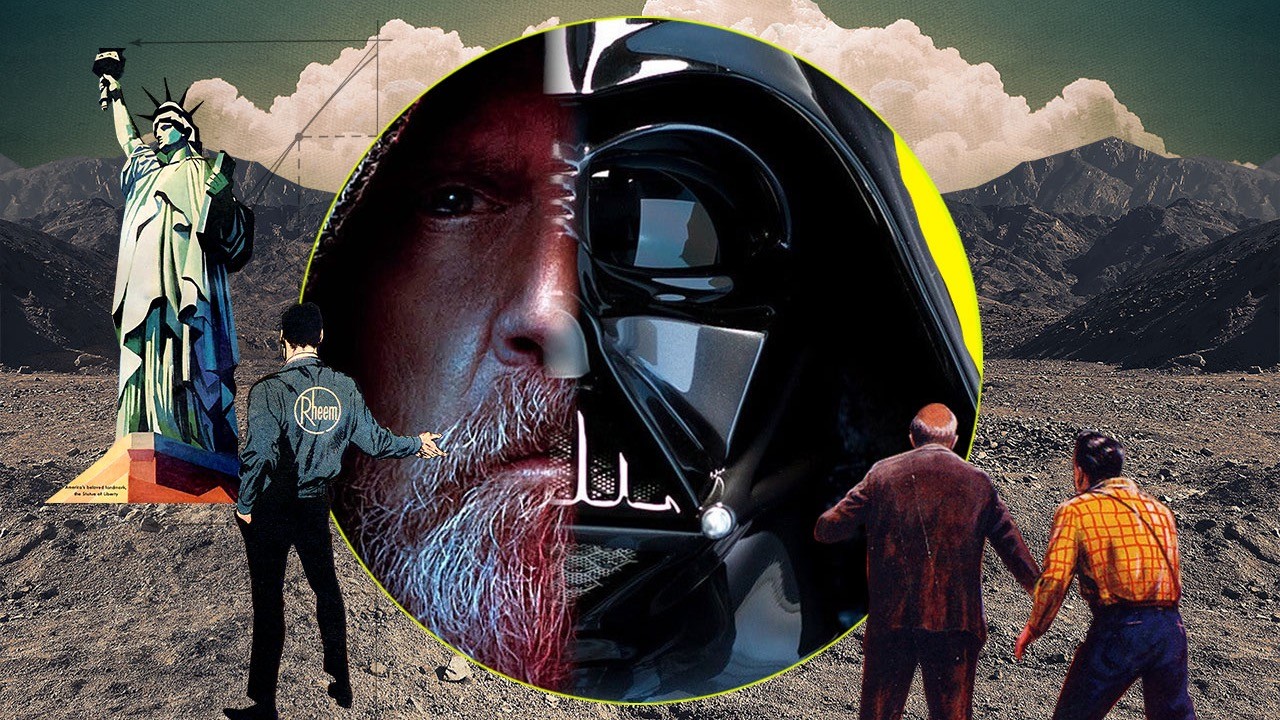
In Star Wars, the Jedi and the Sith face a galaxy in chaos. The Sith seek to control it through dominance, manipulation, and fear. The Jedi, in contrast, accept uncertainty but remain grounded in their principles. There is wisdom in that. Leaders—whether in business, politics, or daily life—can learn from this. The Jedi’s thinking offers valuable lessons on resilience, strategy, and ethical leadership in turbulent times.
1. The Power of Emotional Resilience (Yoda’s Stoic Mindset)
When Fear Dominates
“Fear is the path to the Dark Side. Fear leads to anger. Anger leads to hate. Hate leads to suffering.” — Yoda
Yoda’s warning is timeless. Fear is a natural response to chaos, but if left unchecked, it leads to poor decision-making, aggression, and division. Remember the cave on Dagobah, where Luke faces his greatest fear—becoming Vader—and fails because he reacts with violence instead of reflection? The Sith, especially Vader himself, are defined by their inability to control their fear—fear of loss, fear of change, fear of not having control. That fear warps them, making them reactive and destructive.
We see the same pattern in our world. When fear dominates, people become cynical, reactionary, and defensive. Businesses make hasty decisions that sacrifice long-term success for short-term survival. In 2008, Lehman Brothers collapsed partly because fear drove risky decision-making rather than measured response. Communities fracture because people stop listening to each other. Leaders resort to authoritarian control rather than trust in the collective wisdom of their teams or their people.
Jedi philosophy offers a different path. Emotional resilience doesn’t mean ignoring fear; it means acknowledging it without letting it dictate your actions. It means taking a step back, breathing, and focusing on what can be controlled.
Lesson: Don’t let fear be the loudest voice in the room in moments of uncertainty. Take the time to pause, assess, and respond rather than react. A leader’s calm presence in a storm is often the difference between chaos and clarity.
Action Step: Next time you feel fear rising, practice the “Jedi Pause”—take three deep breaths before responding to any crisis.
Reflection: When did fear last drive one of your important decisions? What was the outcome?
2. Embracing Uncertainty (Yoda’s “Always in Motion is the Future”)
The Illusion of Perfect Knowledge
“Difficult to see. Always in motion is the future.” — Yoda
One of the biggest mistakes people make in uncertain times is waiting for absolute clarity before moving. We want certainty before we act, yet certainty never truly arrives. Markets shift, political landscapes change, and technologies disrupt entire industries overnight. Trying to predict every possible outcome is futile.
The Jedi understand this. When Obi-Wan trains Luke on the Millennium Falcon, he doesn’t tell him exactly where the training droid will strike—he teaches him to sense the moment and respond appropriately. They don’t seek to control the future—they prepare for it. They train relentlessly so that they don’t freeze or hesitate when the moment of action comes.
In business and leadership, the same principle applies. Amazon’s Jeff Bezos built a trillion-dollar company by making decisions with about 70% of the information he wished he had—because waiting for 90% meant being too slow. Successful leaders don’t wait for the perfect conditions before deciding. They focus on adaptability, scenario planning, and skill development so that when change happens, they are ready. They understand that uncertainty is not the enemy—stagnation is.
Lesson: Stop waiting for perfect information. Instead, build agility into your strategy. Make educated decisions but remain flexible enough to adjust when new information arises.
Action Step: Identify one decision you’ve been postponing due to uncertainty and commit to making it within the next week, accepting that you’ll need to adapt as you go.
Reflection: How has waiting for “certainty” cost you opportunities in the past?
3. Strategy in the Face of Overwhelming Odds (The Rebel Alliance’s Agility)
Finding Asymmetric Advantages
The Rebel Alliance is outgunned, outnumbered, and fighting against an empire with nearly unlimited resources. By every traditional measure, they should fail. And yet, they don’t. Why? Because they refuse to fight on the Empire’s terms.
Remember the Battle of Yavin? Instead of matching the Death Star’s firepower (impossible), the Rebels identified a small thermal exhaust port—a vulnerability that could be exploited with precision rather than force. They don’t engage in head-on battles they can’t win. Instead, they focus on agility, resourcefulness, and finding asymmetric advantages.
This lesson is especially relevant in business and politics. It’s easy to feel overwhelmed when looking at larger competitors, powerful adversaries, or economic downturns. But just as the Rebels found creative ways to win, businesses and leaders can thrive by being adaptable. When Netflix faced Blockbuster’s market dominance, it didn’t compete on storefronts—it changed the game entirely with a subscription model that rendered physical locations obsolete.
Lesson: Don’t play by someone else’s rules when facing overwhelming challenges. Find unconventional solutions, lean on agility, and leverage unique strengths.
Action Step: Identify your “thermal exhaust port”—the unique advantage that more prominent or established competitors cannot easily replicate.
Reflection: What rules of engagement are you accepting that put you at a disadvantage?
4. Ethical Leadership in Crisis (Luke vs. Vader)
The Moment of Choice
In Return of the Jedi, Luke Skywalker stands over a defeated Darth Vader. The Emperor urges him to strike the final blow—to give in to his anger and cement his power. Luke hesitates. He sees what he is becoming. And he makes a choice: to throw down his weapon. To not give in. To take the harder but morally right path.
Contrast this with Anakin Skywalker (Vader’s former self) decades earlier. Faced with fear and uncertainty, he does give in—choosing power over principle, control over trust. His descent into darkness is not a sudden event. It’s a series of compromises, each making the next easier until he no longer recognizes himself.
The same risks exist in leadership today. In times of crisis, cutting corners, embracing unethical tactics, or justifying bad behavior as necessary for survival is tempting. During the 2008 financial crisis, some institutions doubled down on problematic practices while others, like JP Morgan Chase, maintained stricter ethical standards—emerging stronger in the long run. Ethical leadership isn’t about doing the right thing when it’s easy—it’s about doing the right thing, especially when it’s hard.
Lesson: Short-term gains achieved unethically often lead to long-term damage. Leadership is defined by the choices made in difficult moments. Hold the line.
Action Step: Identify one area where pressure might tempt you to compromise your values and establish clear boundaries in advance.
Reflection: What is the ethical “line in the sand” you refuse to cross, no matter how difficult circumstances become?
Forging Our Path Through Chaos
The chaos of today’s world is real. The uncertainty, the division, the fear—it’s all there. But we are not powerless in the face of it.
The Jedi teach us that authentic leadership isn’t about eliminating chaos—it’s about navigating it with clarity, strategy, and principle. It’s about controlling ourselves when the world around us is uncontrollable.
In business, politics, and life, the choice is always ours. Will we let fear dictate our actions? Will we wait for certainty that never comes? Or will we embrace the uncertainty, act with integrity, and build something more substantial in the process?
The future is in motion. But that doesn’t mean we are without direction. Like the Jedi, we must trust in our training and each other and that we can weather any storm by standing for something greater than ourselves.
In doing so, we may just find our way back to the unity, resilience, and strength that once defined us—not just as individuals but as a nation.


